Eye Disease Management

Cataracts
If you’ve been diagnosed with cataracts, you may wonder if cataract surgery is right around the corner. Not to worry. There are many preventive steps you can take to slow the progression of cataracts and preserve your vision. That doesn’t mean you won’t eventually need surgery, but you can at least delay the need for quite a while.
Protect Your Eyes from the Sun
The National Eye Institute recommends protecting your eyes from the sun's harmful ultraviolet (UV) and high-energy visible (HEV) rays by always wearing good quality sunglasses while outdoors. Look for sunglasses that block 100 percent of UV rays and absorb most HEV rays with large lenses or a close-fitting wraparound style. Remember that the peak hours for sun exposure are between 10 am and 3 pm or 11 am and 4 pm during daylight savings time and that the sun’s rays are strong enough to pass through clouds, so you need your sunglasses every day.
Avoid Steroid Eye Drops
Steroid eye drops are routinely prescribed to treat dry eyes or an arthritic flare-up in the eyes. Unfortunately, they can also speed up the progression of cataracts. Talk to your Optometrist about how you can manage both conditions without inadvertently making your cataracts worse – and hastening the need for surgery.
Check Your Medications
There are over 300 commonly prescribed medications with side effects that may impact cataract progression. Since your primary care physician may not have access to your eye doctor’s medical records, be sure to ask your doctor if your current medications will affect your cataracts. If you must stay on the medication, it’s even more important to avoid sunlight during peak hours and to wear sunglasses.
Quit Smoking
If you haven’t quit already, here’s another good reason to do it: over time, the damage from smoking can double or triple an individual's risk of developing cataracts. If you’ve been a smoker, your habit was probably a big contributor to the diagnosis. The good news is – by quitting smoking now, you can slow the progression of cataracts.
Follow Eye Health Diet Guidelines
Studies have shown that certain vitamins and nutrients may reduce age-related decline in eye health, particularly antioxidants. If you’ve already been diagnosed with cataracts, adding foods rich in antioxidants to your diet will help slow the progression. This list isn’t exhaustive, but here are some examples to get you started: dark chocolate, blueberries, strawberries, pecans, carrots, sweet potatoes, artichokes, kale, red cabbage, beans, beets, spinach, apples, and plums.
Doctors also recommend eating more fish high in omega-3 fatty acids. This has been linked to a potentially reduced risk of cataracts or their progression. You may also consider taking a multivitamin that contains Vitamin C and E. Talk to your doctor or nutritionist about how you might adopt a healthy eating plan that’s designed to prevent cataracts.
Fortunately, making these healthy modifications to your diet can prevent many other lifestyle diseases such as diabetes. Studies have shown that a diet rich in processed carbohydrates can increase your risk of both developing cataracts and speeding up its progression. It’s important to develop a plan that works for you and supports your holistic health.
Take control of your cataract diagnosis by getting regular eye exams, communicating with your doctor, and putting these tips into practice. You’ll have better vision and prevent the need for cataract surgery in the near future.

Diabetic Eye Disease
You have almost certainly heard of diabetes, which is one of the most common chronic health conditions in the United States with an estimated 100 million adults currently living with diabetes or pre-diabetes. This metabolic disorder occurs when the body is no longer able to regulate its own blood sugar levels and requires intervention to keep them stable. Most people are aware that diabetes can have serious consequences for our health. However, you may be surprised to learn that it can also influence our vision. This is because patients who are diabetic can go on to develop a complication that is known as diabetic retinopathy. Without prompt treatment, diabetic retinopathy can cause permanent vision loss. It is for this reason that patients who suffer from diabetes are asked to attend regular diabetic-related eye exams.
What is diabetic retinopathy?
For us to be able to see clearly, our eyes need to be healthy and functioning perfectly. The most important component of our eyes are the retina. Found at the very back of the eye, the retina is a patch of light-sensitive cells that have the job of converting the light that passes into the eye into messages that are passed up the optic nerve and into our brain. Our brain then receives them and tells us what we can see and how clearly we can see it.
The retina relies on a continuous supply of blood, which is delivered using a network of tiny blood vessels. Over time, having continuously high blood sugar can damage these blood vessels causing a leak of blood and other fluids onto the retina. If this happens, scarring may occur which could compromise the quality of your vision.
Am I at risk of diabetic retinopathy?
Technically, anyone who suffers from diabetes, whether it be Type 1 or Type 2, could be at risk of developing diabetic retinopathy. However, the condition is more likely in certain situations. These include if:
- your blood sugar levels are uncontrolled or poorly controlled
- you have a long history of diabetes
- you have high blood pressure (hypertension)
- you suffer from high cholesterol
- you are pregnant
Regular diabetic-related eye exams will enable your eye doctor to monitor your condition and ensure that any signs of diabetic retinopathy are detected and acted upon immediately.
What to expect from diabetic-related eye exams?
The process of a diabetic eye exam is very simple and straightforward. In fact, in most instances, it is included within the other elements of comprehensive eye exam and you may not even realize that you have had a specific test to check for diabetes-related complications.
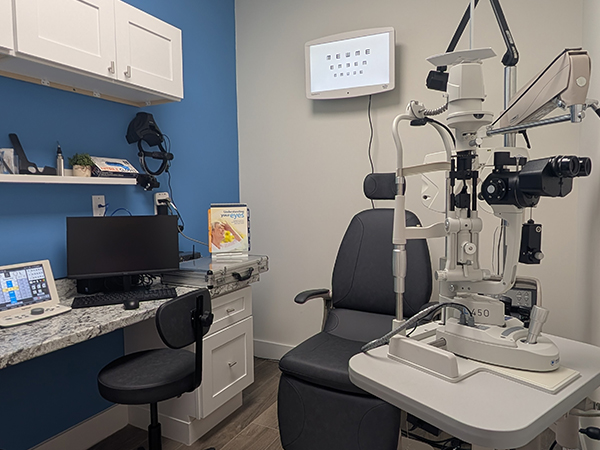
Diabetic eye screening is non-invasive. You will be given eyedrops which will blur your vision. These may sting a little when they are administered, but this will pass within just a few moments. Once your vision is blurred, you will be asked to rest your head onto a device and stare down a lens. This leads to a camera which will take images of the backs of your eyes so that your eye doctor can assess the structures, which include the retina, for any abnormalities. You will see a flash when each image is taken, but at no point should you be in any pain.
In addition to the images of the back of your eye being taken, you will also be given a visual acuity test. This is where you will be asked to read letters off a chart a short distance away, as well as reading from a card held in front of you.
The information that your eye doctor will obtain from your examination will be able to tell them if you are experiencing any of the signs of diabetic retinopathy. If so, they will discuss the best way to get your condition under control. This could involve a combination of elements, including controlling your diabetes more effectively, taking medications or more invasive treatment to preserve your vision. Your eye doctor will give you more specific information based on your individual circumstances.
If you have further questions about diabetic-related eye exams, please contact our knowledgeable eye care team.

Glaucoma
If you’ve been diagnosed with glaucoma, you’re probably already familiar with the typical options in glaucoma treatment – eye drops, laser treatment or traditional surgery. While these are certainly effective, especially when glaucoma is diagnosed early, researchers have been working hard to offer new glaucoma treatments. Their goal is not only to improve outcomes but also reduce the treatment’s side effects and frequency of use.
What is the Goal of Glaucoma Treatment?
Before we dive into the new options, it’s important to understand the goal of any glaucoma treatment. At present, glaucoma is not curable. However, treatment can significantly slow the progression of the disease. Glaucoma damages your eye's optic nerve. Extra fluid builds up in the front part of your eye (cornea), which increases the pressure in your eye. Reducing this pressure is the primary objective of any glaucoma treatment. This is often referred to as intraocular pressure or IOP.
What are the Limitations of Standard Glaucoma Treatments?
Eye drops for glaucoma treatment seem like an easy option but there are several challenges that can reduce its effectiveness. It can be difficult to get all the medicine in the eye, especially for older adults with less of a steady hand. In addition, since it must be applied daily, individuals may forget. Since the drops have no perceivable benefit because early stages of glaucoma have no symptoms, patients might make it a lower priority which is understandable since it may also have unpleasant side effects like burning, red eyes.
Beyond eye drops, laser surgery is a less invasive option. The laser opens clogged tubes and drains fluid. It can take a few weeks to see the full results. If laser surgery or drugs don’t relieve your eye pressure, you may need a more traditional operation. You would have to go into the hospital and will need a few weeks to heal and recover. Although usually effective, glaucoma surgery can make you more likely to get cataracts later on. It can also cause eye pain or redness, infection, inflammation, or bleeding in your eye.
What are Recent Advances in Glaucoma Treatment?
Alternatives or Improvements to Eye Drops
The Glaucoma Research Foundation reported several new developments on the horizon. These technologies focus on reducing patient error in applying eye drops which would make the medication more effective and improve the quality of life for the patient. Here are some of the products underway:
- A polymer, like a contact lens, would contain the drug; it would sit under the eyelid and release the medication over several months
- Microneedles would inject medication into a specific spot to be most effective
- Implantable extended-release devices using engineered highly precise microparticles and nanoparticles
- Polymer-based intraocular delivery technologies that would allow customizable sustained release
- Drops that allow the medication to get into the eye more easily
- Tear duct plugs that release medication
In addition, people with glaucoma who take more than one eye drop per day are beginning to see those medications available as a single, combined eye drop. New products include Cosopt (timolol and dorzolamide), Combigan (timolol and brimonidine) and Simbrinza (brinzolamide and brimonidine).

Macular Degeneration
Macular degeneration, commonly referred to as age-related macular degeneration (AMD), is the single largest cause of sight loss in the developed world and affects more than 10 million Americans. It usually affects people over the age of 60, but has been known to affect those who are younger. It is a painless condition that usually affects both eyes with the loss being experienced in the central vision. It does not affect the peripheral vision, meaning that it does not cause total blindness.
What is the macula?
The macula is the most sensitive part of the retina and is responsible for our central vision and what allows us to see fine details with clarity.
Varieties of AMD
Wet AMD
Wet AMD is one variety of the condition in which abnormal blood vessels grow into the macula, leaking blood or fluid which then causes scarring and a rapid loss of central vision. Wet AMD can develop suddenly and rapid referral to a specialist is essential as it can be treated if caught quickly.
Dry AMD
Dry AMD is the most common variety of age-related macular degeneration and is a gradual deterioration of the retina as the cells die off over time and are not regenerated. Up to 15% of people with dry AMD go on to develop wet AMD, and so any sudden changes in your vision should be followed up with your optometrist as soon as possible.
Symptoms of macular degeneration
Macular degeneration affects each person differently, which means that it can sometimes be difficult to diagnose, particularly as you may not notice any change in your vision early on in the condition. However, as the cells deteriorate, you will start to see an increasing range of symptoms, including:
- Distortion or bends in what should be straight lines (such as lampposts or door frames)
- Dark spots in your central vision
- Fading colors
- Difficulty adapting from dark to light environments
- Blurred vision
- Objects may appear to change shape, size or color, or may move or disappear
- Bright lights may be difficult to tolerate
- Words may disappear while you are reading
Is there any way I can reduce my risk of developing AMD?
Unfortunately, there is no clear reason as to what triggers the process that causes macular degeneration. However, you are at an increased risk if you have a family history of the condition, or if you are over 60.
Experts suggest that the best thing you can do to minimize any potential risk is to ensure that you live a healthy, active lifestyle. You can do this by:
- Stopping smoking
- Eating a healthy, balanced diet with plenty of fruit and vegetables
- Moderating your alcohol consumption
- Maintaining a healthy weight
- Getting regular exercise
There is also some limited research that suggests that eating leafy, green vegetables can slow the deterioration of vision in cases of dry AMD.
Treatment for AMD
Sadly, there is currently no cure for either variety of AMD. In the case of dry AMD, the treatments suggested are done so with the aim of aiding the patient to make the most of their remaining vision. This can include things such as using magnifying glasses to help with reading.
Wet AMD can be treated with anti-vascular endothelial growth factor medication. This should stop additional blood vessels from developing and stop your vision from deteriorating further.
Occasionally, laser therapy is suggested as a possible treatment for destroying abnormal blood cells, but this is only suitable for cases of wet AMD and usually only around 1 in 7 sufferers may be potential candidates for this procedure.
If you have any questions or concerns regarding macular degeneration, we highly recommend that you speak with your optometrist who will be happy to assist you.
Schedule An Eye Exam
Helpful Articles
article_category: products
article_category: psychiatry
article_category: faqs
article_category: cats
article_category: general
article_category: services
article_category: technology
article_category: dogs
article_category: restorative
article_category: vision therapy
article_category: contact lenses
article_category: health
article_category: conditions
article_category: eye surgery co-management
article_category: exotic
article_category: cosmetic
article_category: surgical procedures
article_category: aesthetics
article_category: preventative
article_category: ocular disease management
article_category: eyeglasses
article_category: eye health
article_category: large animal
[]
article_category: psychiatry
article_category: faqs
article_category: cats
article_category: general
article_category: services
article_category: technology
article_category: dogs
article_category: restorative
article_category: vision therapy
article_category: contact lenses
article_category: health
article_category: conditions
article_category: eye surgery co-management
article_category: exotic
article_category: cosmetic
article_category: surgical procedures
article_category: aesthetics
article_category: preventative
article_category: ocular disease management
article_category: eyeglasses
article_category: eye health
article_category: large animal
[]
Flowbite is an open-source library of interactive components built on top of Tailwind CSS including buttons, dropdowns, modals, navbars, and more.
Check out this guide to learn how to get started and start developing websites even faster with components on top of Tailwind CSS.
All Eye Care Services
Find personalized eye care excellence with our comprehensive services. From eye exams to advanced diagnostics, trust us for all your vision needs.
Keep In Touch
For non-urgent questions or to learn more about our services, contact us today!

Quick Links
Hours of Operation
Hours of Operation
- Monday Closed
- Tuesday Closed
- Wednesday Closed
- Thursday 9:30am - 5:30pm
- Friday 9:30am - 5:30pm
- Saturday 10:00am - 5:00pm
- Sunday 11:00am - 4:00pm
- Monday
- Tuesday
- Wednesday
- Thursday
- Friday
- Saturday
- Sunday
- Monday
- Tuesday
- Wednesday
- Thursday
- Friday
- Saturday
- Sunday
© 2026 MAX Family Vision. All rights Reserved - Accessibility Statement - Privacy Policy - Sitemap
Managed and Designed by 